Welcome to the ultimate guide on B2B—where business meets strategy, innovation, and long-term growth. If you’re looking to dominate your industry, this deep dive is your roadmap.


What Exactly Is B2B? A Clear Definition and Core Principles

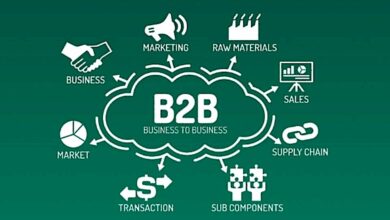
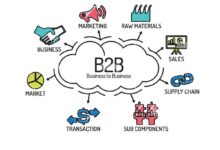
The term B2B, or Business-to-Business, refers to transactions between companies rather than between a company and individual consumers (which is known as B2C). In a B2B model, one business provides products or services to another, often as part of a supply chain, operational infrastructure, or strategic partnership. This model is foundational in industries like manufacturing, wholesale, software-as-a-service (SaaS), logistics, and enterprise technology.
The Historical Evolution of B2B Commerce
B2B is not a new concept. Long before the digital age, businesses traded raw materials, machinery, and services through catalogs, trade shows, and direct sales. The Industrial Revolution accelerated B2B relationships, as factories relied on steady supplies of steel, coal, and textiles from other industrial firms.
Fast forward to the late 20th century, the rise of enterprise resource planning (ERP) systems and electronic data interchange (EDI) began digitizing B2B transactions. These systems allowed companies to automate purchase orders, invoices, and inventory tracking—laying the groundwork for today’s digital B2B ecosystems.
How B2B Differs from B2C
While both models involve selling, the decision-making process, customer journey, and marketing strategies in B2B are fundamentally different from B2C:
Decision-makers: B2B sales often involve multiple stakeholders (e.g., procurement teams, CFOs, technical evaluators), whereas B2C decisions are typically individual.Sales cycle: B2B transactions usually have longer sales cycles due to higher stakes, contracts, and ROI analysis.Volume and pricing: B2B deals involve larger order volumes and negotiated pricing, unlike the fixed prices in B2C..
Relationship focus: B2B thrives on long-term partnerships; B2C often emphasizes one-time or repeat purchases.”In B2B, you’re not just selling a product—you’re selling trust, reliability, and long-term value.” — Forbes Insights
The 7 Key Pillars of a Successful B2B Strategy
Building a winning B2B strategy isn’t about luck—it’s about structure, insight, and execution.Below are seven foundational pillars that separate thriving B2B companies from the rest..
1. Deep Customer Understanding and Buyer Personas
In B2B, knowing your customer goes beyond demographics. You need to understand their business challenges, pain points, goals, and decision-making hierarchy. Creating detailed buyer personas helps tailor your messaging and offerings.
For example, a SaaS company selling CRM software must differentiate between the needs of a sales manager (ease of use, reporting) and a CTO (integration, security, scalability).
Tools like HubSpot’s Buyer Persona Generator can help structure this research effectively.
2. Value-Based Selling Over Feature Dumping
Too many B2B companies fall into the trap of listing product features without connecting them to business outcomes. The shift toward value-based selling means focusing on ROI, efficiency gains, risk reduction, or revenue growth your solution enables.
For instance, instead of saying “Our platform has AI-powered analytics,” say “Our AI analytics reduce customer churn by 30%, saving you $2M annually.”
3. Content Marketing That Educates, Not Sells
B2B buyers are highly informed. According to Content Marketing Institute, 96% of B2B buyers prefer content that helps them make informed decisions. This means whitepapers, case studies, webinars, and industry reports are far more effective than promotional ads.
Top-performing B2B brands like HubSpot and Salesforce dominate through educational content that builds authority and trust.
B2B Marketing: Tactics That Drive Real Results
Marketing in the B2B space is less about flashy campaigns and more about consistent, targeted engagement. Let’s explore the most effective tactics.
Account-Based Marketing (ABM)
ABM is a strategic approach where marketing and sales teams collaborate to target high-value accounts with personalized campaigns. Instead of casting a wide net, ABM focuses on a select group of companies.
For example, a cybersecurity firm might create a custom demo, whitepaper, and webinar series for a Fortune 500 bank they’re trying to win.
According to ABM Institute, companies using ABM see 200% higher sales pipeline efficiency.
Email Marketing with Precision Targeting
Email remains one of the highest ROI channels in B2B. But success lies in segmentation and personalization. Sending generic newsletters won’t cut it.
Use behavioral data (e.g., content downloads, website visits) to trigger follow-up emails. Tools like Mailchimp and ActiveCampaign allow for advanced automation and lead scoring.
LinkedIn and Social Selling
LinkedIn is the #1 platform for B2B engagement. With over 900 million users, it’s where decision-makers spend their professional time.
Social selling—building relationships through content sharing, commenting, and direct outreach—has become essential. Sales reps who use LinkedIn to engage prospects see 45% more sales opportunities (LinkedIn Sales Solutions).
The Role of Technology in Modern B2B Operations
Technology is no longer a support function in B2B—it’s the engine driving growth, efficiency, and customer experience.
CRM Systems: The Backbone of B2B Sales
Customer Relationship Management (CRM) platforms like Salesforce, HubSpot, and Zoho are critical for managing leads, tracking interactions, and forecasting sales.
A well-implemented CRM ensures that no opportunity falls through the cracks and provides data for continuous improvement.
Marketing Automation Platforms
Tools like Marketo, Pardot, and HubSpot Marketing Hub automate repetitive tasks—email campaigns, lead nurturing, social media posting—freeing teams to focus on strategy.
Automation also enables lead scoring, where prospects are ranked based on engagement, helping sales prioritize high-intent leads.
E-commerce and Self-Service Portals
Even in B2B, buyers expect Amazon-like experiences. Companies like Grainger and Fastenal have invested heavily in B2B e-commerce platforms where clients can browse catalogs, request quotes, and place orders 24/7.
Self-service portals reduce friction, improve customer satisfaction, and lower operational costs.
B2B Sales Funnel: Mapping the Buyer’s Journey
Understanding the B2B sales funnel is crucial for aligning marketing and sales efforts. Unlike B2C, the B2B journey is complex and multi-stage.
Stage 1: Awareness
The buyer realizes they have a problem. Your role? Be the first to educate. Use SEO-optimized blog posts, social media, and paid ads to capture attention.
Example: A CFO searching “how to reduce accounts payable errors” should find your article on automation tools.
Stage 2: Consideration
The prospect is evaluating solutions. This is where case studies, comparison guides, and webinars shine.
Offer a free trial or demo to let them experience your product firsthand.
Stage 3: Decision
Now it’s time for proposals, contracts, and negotiations. Sales teams must be equipped with ROI calculators, testimonials, and implementation timelines.
Speed and clarity here can be the difference between winning and losing the deal.
Global Trends Shaping the Future of B2B
The B2B landscape is evolving rapidly. Staying ahead means anticipating these shifts.
Digital Transformation Acceleration
The pandemic accelerated digital adoption. Now, 80% of B2B buyers expect fully digital buying experiences (McKinsey). Companies that don’t offer online quoting, e-signatures, and virtual demos risk losing relevance.
Sustainability and Ethical Sourcing
B2B buyers increasingly care about ESG (Environmental, Social, and Governance) factors. A supplier’s carbon footprint or labor practices can influence purchasing decisions.
Example: Apple requires its suppliers to meet strict environmental standards.
AI and Predictive Analytics
Artificial intelligence is transforming B2B forecasting, customer service, and personalization. Chatbots handle initial inquiries, while predictive analytics identify which leads are most likely to convert.
According to Gartner, by 2025, 80% of B2B sales interactions will be managed by AI.
Common B2B Challenges and How to Overcome Them
No B2B journey is without obstacles. Here are the most common challenges and proven solutions.
Long Sales Cycles
B2B deals can take months or even years. To shorten cycles, focus on building trust early, providing clear ROI data, and removing friction in the approval process.
Tip: Use pilot programs or proof-of-concept projects to demonstrate value quickly.
Complex Decision-Making Units
With multiple stakeholders, alignment is tough. Map out the decision-making unit (DMU) early—identify champions, influencers, blockers, and economic buyers.
Create tailored content for each role: technical specs for engineers, cost-benefit analysis for finance, and strategic vision for executives.
Customer Retention and Churn
Acquiring a new B2B customer can cost 5x more than retaining one. Focus on onboarding, regular check-ins, and continuous value delivery.
Implement a customer success team to proactively address issues and identify upsell opportunities.
B2B Case Studies: Real-World Success Stories
Nothing proves the power of B2B strategy like real-world examples.
How Slack Conquered Enterprise Communication
Slack didn’t start as an enterprise tool. It grew organically within teams, then scaled up to entire organizations. Their freemium model allowed bottom-up adoption, while their sales team targeted IT and HR departments for enterprise contracts.
Result: Acquired by Salesforce for $27.7 billion in 2021.
Shopify’s B2B Expansion
Known for B2C e-commerce, Shopify launched Shopify Markets and B2B-specific features like wholesale pricing and purchase orders. They integrated with ERP systems and offered tailored onboarding.
Outcome: Over 100,000 B2B merchants now use Shopify, including giants like Gymshark and Heineken.
Zoom’s B2B Dominance During the Pandemic
Zoom capitalized on the remote work surge by offering reliable, easy-to-use video conferencing. Their free tier lowered entry barriers, while their sales team upsold enterprise plans with enhanced security and admin controls.
Today, Zoom serves over 500,000 B2B customers worldwide.
What is B2B?
B2B, or Business-to-Business, refers to transactions where one business sells products or services to another business, as opposed to selling directly to consumers (B2C). Common in industries like manufacturing, SaaS, and wholesale, B2B relationships are typically long-term and value-driven.
How does B2B marketing differ from B2C?
B2B marketing focuses on logic, ROI, and long sales cycles, targeting decision-makers with educational content. B2C marketing appeals to emotions, uses mass advertising, and aims for quick purchases.
What are the best B2B marketing channels?
The most effective B2B marketing channels include LinkedIn, email marketing, content marketing (blogs, whitepapers), SEO, and account-based marketing (ABM).
Why is content important in B2B?
Content builds trust, educates buyers, and supports decision-making. In B2B, 70% of the buyer’s journey is digital and content-driven, making blogs, case studies, and webinars essential.
How can AI improve B2B sales?
AI enhances B2B sales through lead scoring, chatbots, predictive analytics, and personalized recommendations. It helps sales teams focus on high-potential leads and automate routine tasks.
Mastering B2B is about more than selling—it’s about building relationships, delivering measurable value, and adapting to a fast-changing landscape. From understanding buyer personas to leveraging AI and automation, the strategies outlined here form the blueprint for sustainable growth. Whether you’re a startup or an enterprise, focusing on these core principles will position your business for long-term success in the competitive world of B2B.
Further Reading: