Ever wondered how companies sell to other companies? Dive into real b2b examples that reveal how industries thrive through smart partnerships, scalable solutions, and strategic innovation.


B2B Examples: Understanding the Core of Business-to-Business Sales

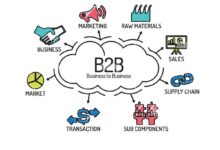
Business-to-business (B2B) refers to transactions between companies rather than between a company and individual consumers (B2C). These relationships form the backbone of global commerce, fueling supply chains, enabling innovation, and driving economic growth. Unlike B2C, where emotions and branding often dominate, B2B decisions are typically based on logic, ROI, long-term value, and operational efficiency.
What Defines a B2B Transaction?
A B2B transaction occurs when one business provides products or services to another business. This could range from raw materials for manufacturing to software solutions for enterprise operations. The key differentiator from B2C is the complexity, volume, and decision-making process involved.
- Transactions are often high-volume and recurring.
- Sales cycles are longer and involve multiple stakeholders.
- Pricing is frequently negotiated and customized.
Why B2B Examples Matter in Modern Commerce
Studying real-world b2b examples helps entrepreneurs, marketers, and executives understand what works—and what doesn’t—in industrial and corporate markets. These case studies reveal successful strategies in sales, marketing, customer retention, and digital transformation.
“B2B isn’t just about selling—it’s about solving business problems at scale.” — Forbes Insights
By analyzing proven b2b examples, companies can benchmark performance, refine their go-to-market strategies, and identify emerging trends in procurement, technology adoption, and partnership models.
Top 7 Real-World B2B Examples Across Industries
Let’s explore seven powerful b2b examples that illustrate how companies create value by serving other businesses. These cases span technology, manufacturing, logistics, and services—highlighting diversity in approach and execution.
1. Salesforce: Cloud-Based CRM for Enterprises
Salesforce is one of the most iconic b2b examples in the SaaS (Software as a Service) space. It provides cloud-based customer relationship management (CRM) tools that help businesses manage sales, marketing, and customer service operations.
- Offers modular platforms like Sales Cloud, Service Cloud, and Marketing Cloud.
- Integrates with thousands of third-party apps via AppExchange.
- Serves over 150,000 customers globally, including major corporations like Amazon and Toyota.
Salesforce’s success lies in its ability to scale solutions for small teams and global enterprises alike. Its subscription-based model ensures recurring revenue and deep client engagement. Learn more about their platform at salesforce.com.
2. Intel: Semiconductor Supplier to Tech Giants
Intel is a foundational player in the tech industry, supplying microprocessors and chips to OEMs (Original Equipment Manufacturers) like Dell, HP, and Lenovo. This makes it a classic b2b example in hardware manufacturing.
- Designs and produces CPUs used in laptops, servers, and data centers.
- Partners with cloud providers like Microsoft Azure and Google Cloud for infrastructure support.
- Invests heavily in R&D to maintain technological leadership.
Intel doesn’t sell directly to consumers; instead, its products power devices that reach end-users through partners. This indirect model is common in B2B manufacturing and highlights the importance of supply chain integration.
3. Alibaba: Global B2B Marketplace Leader
Alibaba Group operates one of the largest B2B e-commerce platforms in the world, connecting manufacturers in China with buyers globally. It’s a prime example of digital transformation in international trade.
- Facilitates bulk transactions between suppliers and retailers.
- Offers trade assurance, logistics support, and financing options.
- Serves millions of SMEs (Small and Medium Enterprises) across 190+ countries.
Through its platform alibaba.com, the company enables small businesses to access global supply chains, making it a democratizing force in global commerce. Alibaba’s model proves that digital marketplaces can scale B2B operations efficiently.
4. Siemens: Industrial Automation and Digitalization
Siemens AG is a German multinational conglomerate that provides industrial automation, energy solutions, and digital twin technologies to manufacturers worldwide. It’s a leading b2b example in Industry 4.0.
- Supplies PLCs (Programmable Logic Controllers), sensors, and SCADA systems.
- Offers MindSphere, an IoT operating system for industrial data analysis.
- Collaborates with automotive, pharmaceutical, and energy firms on smart factory projects.
Siemens helps companies optimize production lines, reduce downtime, and improve energy efficiency. Their solutions are mission-critical for factories aiming to become fully automated and data-driven.
5. HubSpot: Inbound Marketing Platform for B2B Growth
HubSpot has redefined how B2B companies attract, engage, and retain customers through its inbound marketing methodology. It offers a suite of tools for CRM, email marketing, content management, and analytics.
- Provides free tools and educational content to generate leads.
- Uses a freemium model to convert users into paying customers.
- Empowers sales teams with automation and lead scoring features.
One of the standout aspects of HubSpot’s strategy is its content-driven approach. By publishing blogs, templates, and certifications, it builds trust and authority—key elements in B2B decision-making. Explore their resources at hubspot.com.
6. Caterpillar Inc.: Heavy Equipment for Construction & Mining
Caterpillar is a global leader in manufacturing construction and mining equipment, diesel and natural gas engines, and industrial turbines. It serves governments, contractors, and energy companies around the world.
- Sells excavators, bulldozers, and mining trucks to large-scale operators.
- Offers Cat Financial for equipment leasing and financing.
- Provides remote monitoring and predictive maintenance via Cat Connect technology.
Caterpillar’s B2B model includes not just product sales but also long-term service contracts and digital integration. This holistic approach increases customer lifetime value and strengthens client loyalty.
7. AWS (Amazon Web Services): Cloud Infrastructure for Enterprises
AWS is arguably the most influential b2b example in modern cloud computing. It provides scalable, on-demand computing resources—including storage, databases, machine learning, and networking—to businesses of all sizes.
- Hosts critical infrastructure for Netflix, Airbnb, and the U.S. government.
- Offers over 200 fully featured services across data centers globally.
- Supports hybrid and multi-cloud environments for enterprise flexibility.
AWS enables startups to scale rapidly without investing in physical servers and allows large enterprises to modernize legacy systems. Its pay-as-you-go pricing model aligns perfectly with B2B needs for cost control and scalability. Learn more at aws.amazon.com.
Key Characteristics of Successful B2B Examples
While each of the above b2b examples operates in different sectors, they share common traits that contribute to their success. Understanding these characteristics can help businesses replicate best practices and avoid common pitfalls.
Scalability and Customization
Successful B2B companies offer solutions that can scale with their clients’ growth. Whether it’s adding more user licenses in a SaaS platform or increasing server capacity in the cloud, scalability is non-negotiable.
- Customization allows businesses to tailor offerings to specific industry needs (e.g., healthcare vs. finance compliance).
- Modular pricing and tiered service levels make adoption easier for clients at different stages.
For instance, Salesforce allows companies to start with basic CRM and gradually adopt AI-powered analytics or customer service modules as needed.
Long-Term Relationship Building
B2B sales aren’t one-off transactions—they’re long-term partnerships. Companies invest in account management, customer success teams, and ongoing support to ensure client satisfaction.
- Regular check-ins, training sessions, and performance reviews strengthen trust.
- Customer retention is often more valuable than acquisition in B2B.
“The average B2B customer stays with a vendor for 5+ years when supported properly.” — Gartner Research
HubSpot, for example, assigns customer success managers to high-tier clients, ensuring smooth onboarding and continuous optimization of marketing campaigns.
Complex Decision-Making Processes
Unlike B2C, where a single person might make a purchase decision, B2B purchases often involve committees, procurement departments, legal reviews, and budget approvals.
- Sales teams must engage multiple stakeholders: technical evaluators, financial officers, and end-users.
- Content marketing, case studies, and ROI calculators are essential tools for influencing decisions.
AWS addresses this by offering detailed whitepapers, security compliance documentation, and pilot programs to help enterprises evaluate cloud migration risks and benefits.
How B2B Examples Drive Innovation and Market Expansion
Beyond revenue generation, b2b examples play a crucial role in advancing technology, improving efficiency, and opening new markets. They act as enablers for broader economic progress.
Enabling Digital Transformation
Many B2B companies are at the forefront of digital transformation. For example, Siemens’ digital twin technology allows manufacturers to simulate production processes before implementation, reducing errors and saving costs.
- Digital twins improve design accuracy and predictive maintenance.
- IoT integration enables real-time monitoring of industrial assets.
These innovations wouldn’t be possible without B2B partnerships between tech providers and industrial operators.
Accelerating Startup Growth
B2B platforms like AWS and HubSpot have lowered the barrier to entry for startups. Instead of building expensive infrastructure, new companies can leverage existing tools to launch quickly and scale efficiently.
- Startups use AWS to host applications without owning servers.
- They use HubSpot to run targeted marketing campaigns with minimal staff.
This ecosystem of B2B enablers has fueled the rise of tech unicorns and agile businesses that disrupt traditional industries.
Supporting Global Supply Chains
Alibaba and other B2B marketplaces have transformed how goods move across borders. Small manufacturers in Asia can now sell directly to distributors in Europe or North America, bypassing traditional intermediaries.
- Transparent pricing and verified supplier ratings reduce risk.
- Integrated logistics and payment systems streamline international trade.
These platforms have made global sourcing faster, cheaper, and more accessible—especially for SMEs.
Challenges in B2B Models: Lessons from Real Examples
Despite their successes, even the best b2b examples face challenges. Recognizing these hurdles is essential for sustainable growth and competitive resilience.
Long Sales Cycles and High Acquisition Costs
B2B sales often take months or even years to close. This requires significant investment in sales teams, demos, trials, and relationship management.
- Customer acquisition cost (CAC) can be high, especially in enterprise software.
- Companies must balance short-term revenue goals with long-term pipeline development.
Salesforce, for example, spends heavily on sales and marketing—over $6 billion annually—to maintain its market leadership.
Dependency on Key Clients
Some B2B companies become overly reliant on a few large clients. If one client reduces spending or switches vendors, it can significantly impact revenue.
- Diversifying the client base is crucial for stability.
- Offering standardized products can reduce customization burden and dependency.
Intel has faced this challenge as PC demand fluctuated, pushing it to expand into data centers and AI chips to diversify its portfolio.
Technological Disruption and Competition
The B2B landscape is highly competitive, with rapid innovation forcing companies to continuously evolve.
- New entrants like Snowflake and Databricks are challenging traditional data warehouse vendors.
- Legacy providers must innovate or risk obsolescence.
Even giants like Oracle have had to shift to cloud-based models to stay relevant against AWS and Microsoft Azure.
Emerging Trends Shaping Future B2B Examples
The future of B2B is being reshaped by technology, changing buyer expectations, and global economic shifts. Companies that adapt will lead the next wave of innovation.
Rise of AI-Powered B2B Solutions
Artificial intelligence is transforming how B2B companies operate. From predictive analytics to chatbots and automated sales assistants, AI enhances efficiency and personalization.
- Salesforce Einstein uses AI to predict customer behavior and recommend actions.
- HubSpot’s AI tools help write emails, generate blog ideas, and optimize ad copy.
AI is no longer a luxury—it’s becoming a standard feature in competitive B2B offerings.
Subscription and Usage-Based Pricing Models
More B2B companies are moving away from one-time licenses to subscription or usage-based pricing.
- This aligns costs with value delivered.
- It creates predictable revenue streams for vendors.
AWS charges based on compute time and data transfer, while Salesforce charges per user per month. This flexibility appeals to businesses managing variable workloads.
Increased Focus on Customer Experience (CX)
B2B buyers now expect the same level of service and ease of use as in B2C. Poor user experience can lead to churn, even in mission-critical software.
- Intuitive interfaces, 24/7 support, and self-service portals are now expected.
- Customer success teams play a vital role in onboarding and retention.
Companies like Slack and Zoom have raised the bar by offering consumer-grade UX in enterprise tools.
How to Learn from B2B Examples for Your Business
Whether you’re launching a startup or scaling an existing company, studying b2b examples can provide actionable insights. Here’s how to apply these lessons effectively.
Identify Your Niche and Value Proposition
Successful B2B companies solve specific problems for specific industries. Don’t try to be everything to everyone.
- Ask: What pain point do I solve better than anyone else?
- Define your unique value proposition clearly and concisely.
For example, Slack focused on team communication within tech companies before expanding horizontally.
Build a Content-Driven Marketing Strategy
Education is a powerful tool in B2B. Buyers research extensively before making decisions.
- Create blogs, whitepapers, webinars, and case studies.
- Use SEO to attract organic traffic from decision-makers.
HubSpot’s entire growth was fueled by free, high-quality content that established authority and trust.
Leverage Partnerships and Integrations
No B2B company operates in isolation. Strategic partnerships can accelerate growth and enhance product value.
- Integrate with popular platforms (e.g., Salesforce AppExchange, AWS Marketplace).
- Form alliances with complementary service providers.
Zoom’s integration with Slack and Google Calendar made it easier for teams to adopt during the remote work boom.
What are b2b examples?
B2B examples are real-world cases where one business sells products or services to another business. Common examples include Salesforce selling CRM software to enterprises, Intel supplying chips to computer manufacturers, and Alibaba connecting global suppliers with buyers.
Why are b2b examples important for startups?
B2B examples provide proven models for go-to-market strategies, pricing, customer acquisition, and scaling. Startups can learn from these cases to avoid common mistakes and accelerate growth.
How do b2b examples differ from b2c?
B2B examples involve longer sales cycles, multiple decision-makers, and a focus on ROI and efficiency, while B2C focuses on individual consumers, emotional appeal, and faster transactions.
Which industries have the most b2b examples?
Technology (SaaS, cloud), manufacturing (equipment, components), logistics, industrial services, and professional services (consulting, marketing) are rich with b2b examples.
Can small businesses benefit from b2b examples?
Absolutely. Small businesses can adopt strategies from top b2b examples—like content marketing, subscription models, and customer success programs—to compete effectively and grow sustainably.
Studying b2b examples offers invaluable insights into how successful companies operate, innovate, and dominate their markets. From tech giants like AWS and Salesforce to industrial leaders like Siemens and Caterpillar, these cases demonstrate the power of solving business problems at scale. By understanding their strategies, challenges, and trends, any organization can refine its approach and build a resilient, customer-centric B2B model.
Further Reading: