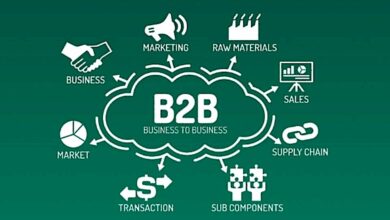
Ever wonder how businesses sell to other businesses? B2B companies drive the backbone of global commerce, shaping industries from tech to manufacturing. Let’s dive into what makes them tick and how they thrive.



What Are B2B Companies and How Do They Work?

B2B companies, or business-to-business firms, sell products or services to other businesses rather than individual consumers. Unlike B2C (business-to-consumer) models, B2B transactions often involve longer sales cycles, higher order values, and more stakeholders in decision-making. These companies operate across industries like software, logistics, industrial equipment, and professional services.
The Core Definition of B2B Companies
At its heart, a B2B company provides goods or services that help other organizations function, grow, or innovate. For example, a cloud infrastructure provider like Amazon Web Services (AWS) serves thousands of businesses by offering scalable computing power. Similarly, a firm like Siemens supplies automation systems to manufacturing plants worldwide.
- B2B companies focus on solving business problems, not consumer wants.
- Transactions are typically contract-based and recurring.
- Sales cycles can last weeks or even months due to complexity.
Key Differences Between B2B and B2C Models
While both models aim to generate revenue, their strategies differ significantly. B2C marketing often relies on emotion, impulse, and brand appeal. In contrast, B2B companies emphasize logic, ROI, and long-term value. A consumer might buy a smartphone because it looks sleek; a business buys enterprise software because it improves productivity by 30%.
“In B2B, you’re not just selling a product—you’re selling a solution to a problem that impacts someone’s job, team, or bottom line.” — Sales Strategist, Neil Rackham
Top Industries Dominated by B2B Companies
B2B companies span nearly every sector of the economy. Some industries are almost entirely B2B-focused, where end consumers rarely interact directly with the provider. Understanding these sectors helps clarify the scale and diversity of B2B operations.
Technology and SaaS Providers
The tech industry is a powerhouse for B2B companies, especially with the rise of Software as a Service (SaaS). Firms like Salesforce and Microsoft offer CRM and productivity tools used by enterprises globally. These platforms enable sales tracking, customer support, and internal collaboration.
- SaaS models rely on subscription revenue, ensuring predictable income.
- Integration with existing systems is a major selling point.
- Data security and compliance are top concerns for clients.
Manufacturing and Industrial Supply
From raw materials to finished components, manufacturing B2B companies form the backbone of supply chains. A company like 3M produces adhesives, safety gear, and filtration systems sold to factories, hospitals, and construction firms.
These businesses often operate under tight margins but achieve profitability through volume and long-term contracts. Just-in-time inventory systems mean reliability and delivery speed are critical differentiators.
Professional Services and Consulting Firms
Firms like McKinsey & Company or PwC provide strategic advice, financial auditing, and operational consulting. Their clients range from startups to Fortune 500 companies seeking expertise they lack internally.
- Value is measured in outcomes—cost savings, growth, or risk mitigation.
- Trust and reputation are paramount in client acquisition.
- Engagements are often project-based with defined deliverables.
How B2B Companies Generate Revenue and Scale
Unlike B2C businesses that may rely on mass-market appeal, B2B companies use targeted, high-value strategies to generate revenue. Their pricing, sales models, and customer relationships are built for sustainability and scalability.
Pricing Models Common in B2B Companies
B2B pricing is rarely one-size-fits-all. Instead, companies use tiered, usage-based, or custom pricing structures. For example, a cybersecurity firm might charge based on the number of endpoints protected or data volume processed.
- Subscription Model: Monthly or annual fees for ongoing access (e.g., Slack, Zoom).
- Per-User Licensing: Charges based on the number of employees using the service.
- Outcome-Based Pricing: Fees tied to performance metrics (e.g., % of cost saved).
The Role of Long-Term Contracts in B2B Revenue
One of the most powerful tools B2B companies use is the long-term contract. These agreements lock in revenue, reduce churn, and allow for better forecasting. A three-year IT services contract, for instance, gives both parties stability—vendors can plan capacity, and clients get consistent support.
According to a report by Gartner, organizations that use multi-year contracts see up to 40% lower operational costs over time due to reduced vendor switching and integration overhead.
Scaling Through Strategic Partnerships
Many B2B companies scale not by going direct to market, but by partnering with other firms. For example, Oracle works with system integrators like Accenture to deploy its enterprise software. These partnerships extend reach without the need for massive sales teams.
“Partnerships are force multipliers in B2B growth. One alliance can open doors to thousands of new prospects.” — Channel Executive, Cisco Systems
Digital Marketing Strategies for B2B Companies
While traditional sales still play a role, digital marketing has become essential for B2B companies. The modern buyer journey is online, research-driven, and peer-influenced. Companies that master digital presence gain a significant edge.
Content Marketing: Educating the B2B Buyer
B2B buyers don’t make impulsive decisions. They research extensively before engaging with a vendor. That’s why content marketing—whitepapers, case studies, webinars—is so effective. A well-crafted case study showing how a software reduced downtime by 50% can be more persuasive than any sales pitch.
- Top-performing B2B content addresses pain points directly.
- SEO-optimized blogs drive organic traffic from decision-makers.
- Gated content (e.g., downloadable guides) helps capture leads.
LinkedIn and Social Selling in B2B
LinkedIn is the go-to platform for B2B companies. With over 900 million users, including executives, managers, and procurement officers, it’s a goldmine for targeted outreach. Sales reps use social selling to build credibility, share insights, and initiate conversations.
A study by LinkedIn Sales Solutions found that 80% of B2B leads come from LinkedIn, making it the most effective social network for professional outreach.
Account-Based Marketing (ABM) Explained
ABM is a hyper-targeted strategy where marketing and sales teams collaborate to pursue high-value accounts as if they were markets of one. Instead of broad campaigns, ABM uses personalized messaging, custom content, and direct engagement.
For example, a cybersecurity firm might create a tailored demo video for a specific bank, addressing its regulatory challenges and threat landscape. This level of personalization increases conversion rates significantly.
- ABM improves alignment between sales and marketing.
- It increases deal size and shortens sales cycles.
- Best suited for enterprise-level B2B companies.
The Sales Process in B2B Companies
The B2B sales process is complex, involving multiple touchpoints, stakeholders, and stages. Unlike B2C, where a single person can make a purchase, B2B deals often require approval from finance, IT, legal, and operations teams.
Stages of the B2B Sales Funnel
The typical B2B sales funnel includes awareness, consideration, decision, and retention. At each stage, the approach must evolve:
- Awareness: Prospects discover your solution via ads, content, or referrals.
- Consideration: They compare vendors, request demos, and evaluate ROI.
- Decision: Stakeholders negotiate terms, pricing, and contracts.
- Retention: Onboarding, support, and upselling keep clients engaged.
The Role of CRM in Managing B2B Sales
Customer Relationship Management (CRM) systems like Zoho CRM or HubSpot are critical for tracking interactions, managing pipelines, and forecasting revenue. A well-maintained CRM gives sales teams visibility into every prospect’s journey.
According to Nucleus Research, companies using CRM see an average $8.71 return for every $1 spent, thanks to improved efficiency and customer retention.
Handling Objections and Closing Deals
B2B sales reps must be skilled at handling objections—budget constraints, integration concerns, or fear of change. The key is active listening and providing evidence-based responses. Case studies, testimonials, and pilot programs help reduce perceived risk.
“The best closers don’t push—they guide. They help the buyer realize the solution is already the right choice.” — Sales Trainer, Sandler Training
Challenges Faced by B2B Companies Today
Despite their advantages, B2B companies face unique challenges. Market volatility, technological disruption, and evolving buyer expectations require constant adaptation.
Long Sales Cycles and Decision Fatigue
One of the biggest hurdles is the extended sales cycle. A deal that takes six months to close ties up resources and delays revenue. During this time, prospects may lose interest, budgets may shift, or competitors may intervene.
To combat this, leading B2B companies use sales enablement tools—interactive demos, ROI calculators, and automated follow-ups—to keep momentum.
Competition and Market Saturation
Many B2B markets are crowded. In SaaS alone, there are thousands of CRM, HR, and marketing automation tools. Standing out requires more than features—it demands a clear value proposition and brand differentiation.
- Companies that focus on niche markets often outperform generalists.
- Customer experience is becoming a key differentiator.
- Innovation must be continuous, not occasional.
Data Privacy and Compliance Risks
As B2B companies collect more data, they face stricter regulations like GDPR and CCPA. A single breach can damage trust and lead to legal penalties. Ensuring compliance isn’t just a legal requirement—it’s a competitive advantage.
Firms like Okta have built entire businesses around secure identity management, showing how compliance can be a selling point.
Future Trends Shaping B2B Companies
The B2B landscape is evolving rapidly. Digital transformation, AI, and remote work are reshaping how companies operate and sell. Staying ahead means anticipating these shifts.
AI and Automation in B2B Operations
Artificial intelligence is revolutionizing B2B companies. Chatbots handle initial inquiries, predictive analytics forecast sales, and machine learning optimizes pricing. For example, IBM Watson helps firms analyze customer behavior and recommend next steps.
- AI reduces manual work in lead scoring and qualification.
- Automation improves response times and customer satisfaction.
- Early adopters gain a first-mover advantage in efficiency.
The Rise of Self-Service and Digital Buying
Today’s B2B buyers prefer to research and purchase online without talking to a sales rep. Companies like Atlassian have embraced this trend with self-service portals, free trials, and instant onboarding.
A McKinsey study found that 70% of B2B buyers now expect a digital buying experience comparable to B2C—fast, seamless, and transparent.
Sustainability and Ethical Sourcing in B2B
More businesses are prioritizing sustainability. B2B companies that offer eco-friendly products, carbon-neutral shipping, or ethical labor practices gain favor with conscious buyers. For instance, Patagonia Workwear markets durable, sustainable apparel to corporate clients.
This trend isn’t just ethical—it’s economic. A 2023 IBM report showed that 68% of B2B buyers consider sustainability when choosing suppliers.
How to Start a Successful B2B Company
Launching a B2B company requires careful planning, market research, and execution. Unlike B2C startups, B2B ventures need to prove value quickly to gain traction.
Identifying a Real Business Problem to Solve
The foundation of any successful B2B company is solving a genuine pain point. Instead of asking “What product can I build?”, ask “What problem keeps business leaders up at night?”
- Conduct interviews with potential clients.
- Analyze industry reports and gaps in existing solutions.
- Validate demand before building a full product.
Building a Minimum Viable Product (MVP)
An MVP allows you to test your idea with minimal investment. For B2B, this could be a basic software prototype, a consulting package, or a pilot service for a single client.
Feedback from early users helps refine the offering. Companies like Dropbox started with a simple file-syncing tool and scaled based on user needs.
Securing Early Clients and Building Credibility
First clients are crucial. Offer discounted rates or free trials in exchange for testimonials and case studies. These social proofs build trust with future prospects.
“Your first 10 customers aren’t just revenue—they’re your marketing team.” — Entrepreneur, Jason Fried
What is the difference between B2B and B2C companies?
B2B companies sell to other businesses, focusing on ROI, efficiency, and long-term value. B2C companies target individual consumers, emphasizing emotion, convenience, and brand appeal. B2B sales cycles are longer, involve more stakeholders, and have higher transaction values.
How do B2B companies generate leads?
B2B companies generate leads through content marketing, LinkedIn outreach, SEO, webinars, trade shows, and account-based marketing. They often use gated content (e.g., whitepapers) to capture contact information and nurture prospects through email campaigns.
What are the most profitable B2B industries?
Some of the most profitable B2B industries include SaaS, cybersecurity, cloud computing, industrial automation, and professional consulting. These sectors offer high margins, recurring revenue, and strong demand due to digital transformation.
Why is customer retention important for B2B companies?
Customer retention is critical because acquiring a new B2B client can cost 5–7 times more than retaining an existing one. Long-term contracts, upselling, and referrals from satisfied clients drive sustainable growth.
What role does technology play in modern B2B companies?
Technology enables automation, data analytics, remote collaboration, and digital sales. CRM systems, AI-driven insights, and self-service platforms help B2B companies scale efficiently and meet evolving buyer expectations.
B2B companies are the engine of global commerce, powering innovation and efficiency across industries. From tech startups to industrial giants, they thrive by solving real business problems with scalable solutions. Success in B2B requires deep market understanding, strategic marketing, and relentless focus on customer value. As digital transformation accelerates, the companies that embrace AI, sustainability, and customer-centric models will lead the next era of growth. Whether you’re launching a startup or optimizing an existing firm, the principles of clarity, credibility, and consistency remain timeless.
Further Reading: